The Institute for the Study of the Problems of Law and Order, Crime and Professional Development of the Staff of Prosecution Authorities of the Republic of Tajikistan (hereinafter – the Institute)

Following the acquisition of state independence and the official recognition of the Republic of Tajikistan as an independent state by the international community, under the guidance and direct support of the President of the country, Leader of the Nation, His excellency Emomali Rahmon, dozens of higher professional and educational institutions for retraining and advanced training of personnel of various agencies were established and began operating across the country, with the aim of preparing highly qualified specialists to manage and promote the modern statehood of  Tajiks.

Based on the submition of the General Prosecutor Office of the Republic of Tajikistan, by the decree No. 541 of the Council of Ministers of the Republic of Tajikistan on December 1, 1994, the “Professional Training Courses of Prosecutorial Staff and the Laboratory for Studying Issues of Crime under the Prosecutor's Office of the Republic of Tajikistan” were established, by Presidential Decree No. 343 on October 10, 1995. It was transformed into the “Professional Training Courses of Staff of the Prosecutor’s Offices of the Republic of Tajikistan and the Study of Crime-related Issues,” and was incorporated into the structure of the General Prosecutor Office of the Republic of Tajikistan.

After ten years of operation, in 2004, the Professional Training Courses were transformed into the “Professional Training Center of Prosecutorial Staff.” Later, by Presidential Decree No. 539 dated August 14, 2015, within the new structure of the General Prosecutor Office of the Republic of Tajikistan, the “The Institute for the Study of the Problems of Law and Order, Crime and Professional Development of the Staff of Prosecution Authorities of the Republic of Tajikistan” was established. This institution operated until December 5, 2025, at the address: Dushanbe city, N. Qaraboev Avenue, Building No. 3. It was relocated to its new premises at Dushanbe city, Shamsi Street, No. 5.After the inauguration and commissioning of the new building of the Institute—carried out with the direct participation of the Founder of Peace and National Unity, Leader of the Nation, President of the Republic of Tajikistan, Honorable Emomali Rahmon.

The establishment of the Institute was one of the timely and important initiatives of the President of the country and has played a significant role in providing the authorities with highly qualified, capable, and politically mature personnel. The Institute operates on the basis of the Constitution of the Republic of Tajikistan, the Constitutional Law of the Republic of Tajikistan “On the Prosecutor’s Office of the Republic of Tajikistan,” the Law of the Republic of Tajikistan “On Education,” as well as other normative legal acts, the decrees of the General Prosecutor of the Republic of Tajikistan, and the Statute of the Institute, which was approved by the order of the General Prosecutor of the Republic of Tajikistan on December 17, 2015, No. 5-261.

In this regard with framework, accordance with Article 33 of the Law of the Republic of Tajikistan "On Education" and Article 13 of the Law of the Republic of Tajikistan "On Higher Professional Education and Post-Higher Professional Education," the Ministry of Education and Science of the Republic of Tajikistan has granted the Institute a license to conduct educational activities in the field of post-higher professional education. This includes the specialties of law, judicial, prosecutorial, and investigative activities at the master’s level, as well as short-term retraining and advanced training courses for prosecutors and investigators.

In this regard, the Order of the General Prosecutor of the Republic of Tajikistan No. 29, on February 15, 2016, “On the Improvement of the System of Training, Retraining, and Professional Qualification Enhancement of the Personnel of the Prosecutorial Authorities of the Republic of Tajikistan” was adopted and put into effect.

Over the course of its 30 years of operation, the Institute has implemented more than 150 educational programs and conducted 476 retraining and professional development sessions, covering over 7,000 personnel.

Since the establishment of the Institute, the level and quality of education, as well as the organization of training sessions, have improved annually, increasing from 7 to 13 educational programs per year, involving between 305 to 670 staff members from prosecutorial bodies, thereby contributing significantly to the enhancement of their professional competencies.

In moreover, the Institute’s staff has actively participated in national and international conferences and round tables seminars, contributing to 44 events with presentations and reports.

In futhermore, with the participation of scholars in the field, representatives of law enforcement agencies, other state institutions, and the mass media, six scientific-practical conferences were held under the title such as “Combating Torture: Actions and Achievements,” “Ensuring the Rule of Law during the Period of State Independence,” “The Role of the Prosecutor’s Office in Ensuring the Rule of Law and Combating Crime during the Period of Independence,” “The Constitution as a Guarantor of the Protection of Human and Civil Rights and Freedoms,” among others. The conference materials were published as separate booklets and also printed in the periodical scientific-practical and theoretical journal of the General ProsecutorOffice of the Republic of Tajikistan, “Qonuniyat” (“Legality”), making them accessible to personnel of the relevant institutions.

The Institute has also compiled and developed educational and methodological manuals for employees, scholars, master’s students and doctoral candidates, students of law universities, and a wide audience interested in issues related to combating crime. These include: “Investigation Toolkit,” “On the Prevention, Detection, and Investigation of Crimes Related to Domestic Violence,” and the educational-methodological model “Judicial Justice for Juveniles,” “On the Investigation of Crimes in the Field of Human Trafficking,” “Prosecutorial Oversight of the Implementation of Legislation on the Prevention, Detection, and Investigation of Torture in the Republic of Tajikistan,” as well as the academic textbook “Prosecutorial Oversight.” A number of sectoral manuals have also been published, including “Guidelines on the Methods and Procedures for Exercising Prosecutorial Oversight and Ensuring Compliance with Legislation on the Prevention, Detection, and Investigation of Torture,” “On the Detection and Investigation of Crimes Related to the Misappropriation of Budgetary Funds,” and “On the Organization of Training in the Prosecutor’s Office of the Republic of Tajikistan.”

Also, with the aim of improving the existing legislation, the Institute has submitted proposals and recommendations to more than 100 draft normative legal acts. To promote and raise awareness of the law, numerous presentations and meetings have been conducted through mass media channels, including radio and television.

It should be noted that the heads of the Courses, the Center, and the Institute – N.E. Emomov (1994–1996), U.Kh. Khalikov (1997–1999), G. Muzaffarbekov (1996–1997), I.Kh. Khalmatov (1999–2008), M.N. Khalifazoda (2009–2010), A.N. Nuraliev (2010–2013), K. Mukhabatov (2014–2015), A.S. Muhammadiev (2015–2019), K.R. Rakhmatov (2019–2022), and Sh.Kh. Qurbonzoda (since 2022)—have played a significant role in organizing and implementing relevant educational programs. In addition, the contributions of distinguished veterans of the prosecutorial bodies – such as: T.A. Akobirov, M. Mirzoeva, A.Sh. Sharipov, Sh. Iskandarov, S.S. Jamolzoda, A.Q. Yusupov, S.Sh. Safarov, R. Najmiddinov, A. Rakhmonberdiev, A.M. Borisova, Sh.K. Bakhodurova, S.D. Qurbonzoda, M.M. Gadoev, Q.H. Hasanov, S. Kholov, and others who served as deputy directors and senior instructors, are considered to be essential and valued contributors to the training and education of prosecutorial personnel.

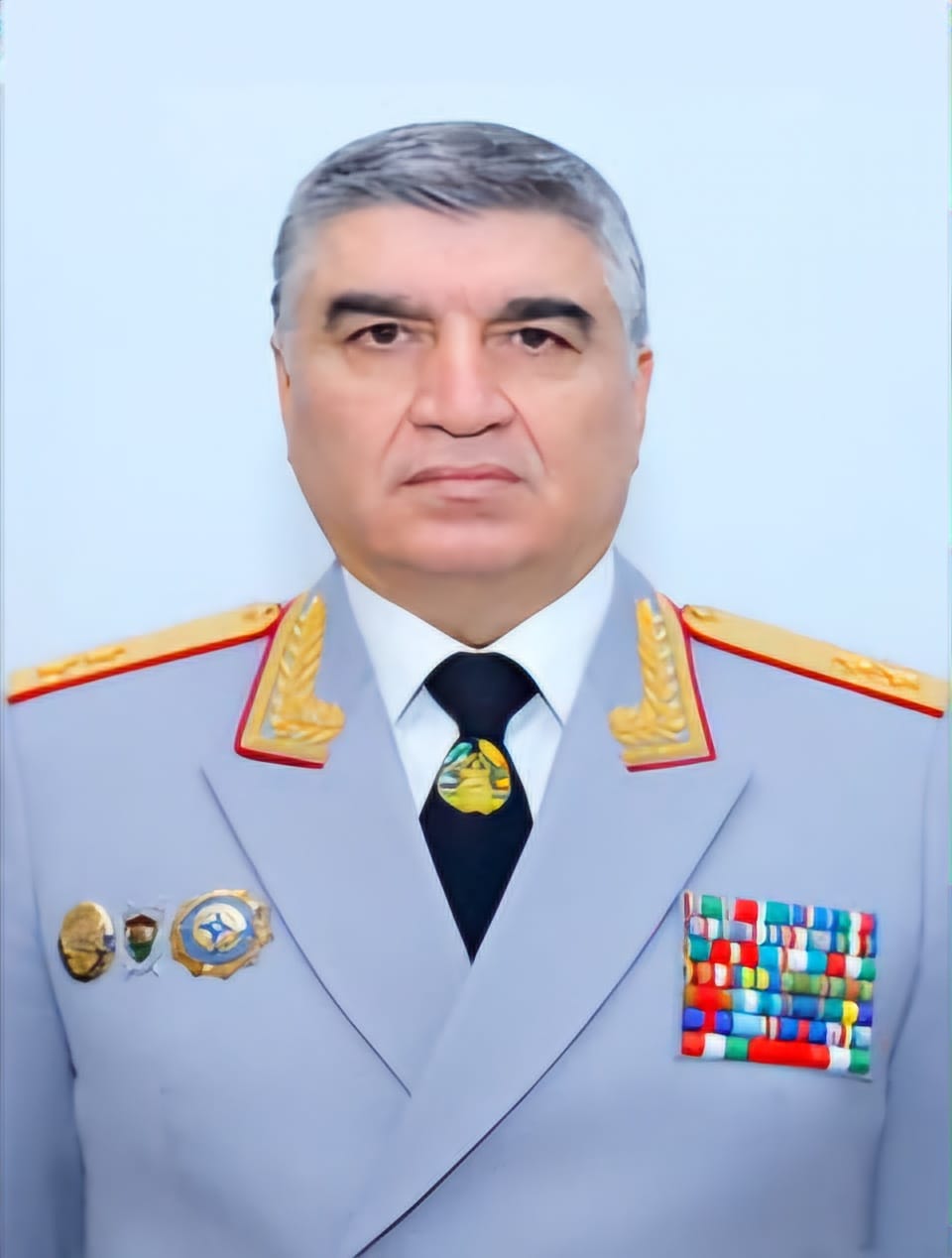
Currently, the Institute is headed by one of the distinguished experienced of the prosecutorial authorities, Major General of Justice Sh.H. Qurbonzoda. Serving as Deputy Director is B.R. Kamolzoda, State Justice Advisor, 3rd Class. Senior instructors include veterans of the prosecutorial bodies: Q.T. Mirzoev, Justice Advisor, 1st Class; A.H. Damdorov, Justice Advisor, 2nd Class; S. Sirojzoda, State Justice Advisor, 3rd Class; Sh. Nuralizoda and R.R. Zamonov, both Justice Advisors, 1st Class; and D.H. Murodzoda, Prosecutor-Criminalist Instructor and State Justice Advisor, 2nd Class, who all contribute actively to the Institute’s educational mission.

The main functions of the Institute are as follows:

  • Providing professional training, retraining, and enhancement of the professional qualifications of personnel of the prosecutorial bodies;
  • In cooperation with the Personnel Department of the General Prosecutor Office, undertaking measures to improve the professional skills of prosecutorial staff;
  • Conducting scientific research on general issues related to prosecutorial oversight, the rule of law, legal order, and the fight against crime;
  • Carrying out scientific-research, educational-methodological activities, and strengthening mutual cooperation with state authorities, scientific and educational institutions, including international organizations.


Material and technical base of the Institute:

The Institute building consists of five floors with a total area of 1,905.04 square meters. It includes two conference halls, ten modern classrooms equipped with innovative educational technologies, seventeen office rooms, a library, a reading room, computer and language laboratories, and a forensic training room furnished with work desks, chairs, and a range of information, communication, computer, and forensic equipment (such as projectors, investigation kits, video recording and photography devices), along with other modern technical teaching tools.

The instructors’ offices are equipped with up-to-date computers and have daily access to the internet network.

Additionally, the Institute has an electronic repository of educational programs and a library holding a collection of 7,000 educational and literary books.


Cooperation with Partners and Their Involvement in the Educational Process at the Institute:

The Institute for the Study of the Problems of Law and Order, Crime and Professional Development of the Staff of Prosecution Authorities of the Republic of Tajikistan maintains fruitful cooperation with international organizations, including the Regional Office of the United Nations High Commissioner for Human Rights (OHCHR) for Central Asia, the United Nations Office on Drugs and Crime (UNODC) in Tajikistan, the Organization for Security and Cooperation in Europe (OSCE) Programme Office, the United Nations Development Programme (UNDP) in Tajikistan, the United Nations Children's Fund (UNICEF), the International Organization for Migration (IOM), the American Bar Association Rule of Law Initiative (ABA ROLI), the Swiss Association for International Cooperation “Helvetas Swiss Intercooperation,” as well as the public organization “Center for Human Rights,” among others.

Through these partnerships, the Institute regularly conducts educational sessions aimed at fulfilling the international human rights obligations of the Republic of Tajikistan.

During the period from 2010 to 2020, within the framework cooperation with the aforementioned organizations, the Institute received, free of charge, 35 types of information and communication technology equipment, 10 sets of office desks, 20 chairs, and 18 titles of essential legal literature with a total value of 146,631 somoni.

Meanwhile, faculty members from higher education institutions and professional development centers for law enforcement and other state bodies are regularly involved in the teaching process at the Institute, which contributes significantly to the enhancement of the knowledge and professional skills of the trainees.

Furthermore, for the purpose of exchanging practical experience, both international and local specialists and trainers are invited according to established procedures to conduct training sessions.

To implement the Memorandum of Understanding and Cooperation between the General Prosecutor Office of the Republic of Tajikistan and the General Prosecutor Office of the Russian Federation, a Cooperation Program for 2024 was signed virtually between the Institute of the General ProsecutorOffice of the Republic of Tajikistan and the University of the Prosecutor’s Office of the Russian Federation. Within the framework of this program, two virtual round tables were held under the topics:“International Cooperation between the Prosecutorial Authorities of the Republic of Tajikistan and the Russian Federation” and “The Role of Prosecutorial Bodies in Implementing Migration Legislation and Ensuring the Protection of Migrants' Rights and Freedoms.”

Also, to promote the involvement of specialists and facilitate the exchange of educational, methodological, and practical materials, as well as other retraining-related activities, a cooperation program was signed with the State Educational Institution of Higher Professional Education “Academy of the Ministry of Internal Affairs of the Republic of Tajikistan” for the years 2025–2026, which is currently under implementation.

The Institute’s staff continues to make dedicated efforts to further improve the quality and effectiveness of educational programs and to adopt additional measures aimed at strengthening the professional competencies of personnel in the prosecutorial system.